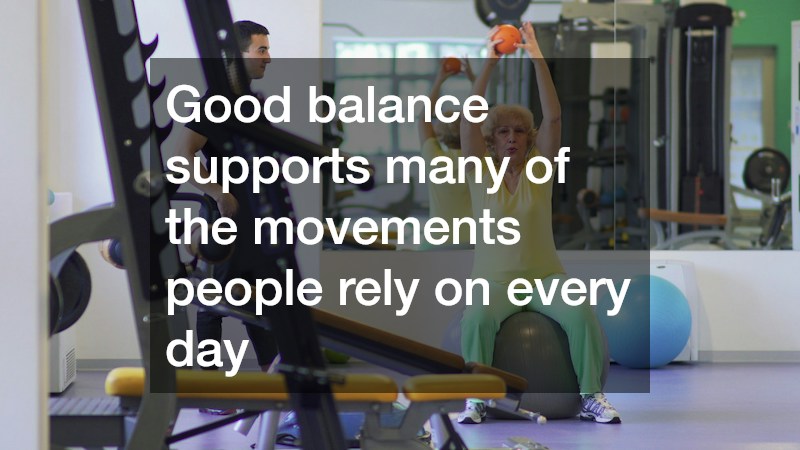

Good balance helps you move safely and confidently throughout your daily routine. Whether you’re walking across an uneven surface, climbing stairs, getting out of a chair, or participating in recreational activities, balance allows your body to stay stable while you move. As people age or recover from an injury, changes in strength, flexibility, coordination, or mobility can affect this ability. Fortunately, targeted exercises can help improve stability and support better movement.
Balance exercises can focus on several areas, including lower-body strength, core stability, coordination, and body awareness. Physical therapy plays a significant role in restoring and maintaining balance, reducing the risk of falls, and enhancing overall physical wellness. Understanding some common exercises can also help explain how balance training fits into a broader approach to physical wellness.
Practicing Single-Leg Stability
Being able to briefly stand on one leg is useful for many everyday movements. Walking, stepping over objects, and climbing stairs all require the body to shift weight from one side to the other.
A supported single-leg stand is a straightforward way to practice this skill. Stand next to a sturdy surface and place one or both hands on it. Shift the weight onto one foot and slowly lift the opposite foot from the floor. Hold the position for several seconds before lowering the foot and switching sides.
As balance improves, a person can gradually reduce how much support they use. However, it’s important to prioritize safety rather than trying to hold the position for as long as possible. Performing this exercise near a stable surface can help reduce the risk of falling.
Improving Core Stability
The muscles around the abdomen, back, and pelvis contribute to overall stability. A stronger core can help the body maintain control when reaching, turning, or changing positions.
One accessible exercise is the seated knee lift. Sit upright in a sturdy chair with both feet on the floor. Slowly lift one knee toward the chest without leaning backward, then lower it and repeat on the opposite side. This movement challenges the abdominal and hip muscles while allowing the person to remain seated.
Another option is a standing weight shift. Stand with the feet comfortably apart while holding a stable surface if necessary. Slowly shift the weight from one foot to the other, maintaining an upright posture. This exercise helps the body practice controlled changes in position.
Training Coordination and Movement
Balance isn’t only about strength. The brain, muscles, joints, and inner ear work together to help the body understand where it is in space. Exercises that involve controlled movement can help develop coordination and body awareness.
Heel-to-toe walking is one example. Stand upright and slowly walk forward by placing the heel of one foot directly in front of the toes of the opposite foot. Take small, controlled steps while keeping your eyes forward. Because this exercise can be challenging, it should be performed near a counter, wall, or other stable support when appropriate.
Another useful movement is controlled stepping. Step forward with one foot, bring the other foot forward, and return to the starting position. Repeat on the opposite side. This can help the body practice shifting weight while maintaining control.
Adding Balance Exercises Safely
Balance exercises should match a person’s current abilities. Someone who has significant weakness, dizziness, pain, or a history of falls may need additional guidance before attempting certain movements.
A physical therapy program can be adjusted based on factors such as strength, mobility, coordination, and previous injuries. Exercises can also become more challenging over time by changing the amount of support, increasing repetitions, or incorporating different movement patterns.
Safety should remain a priority during every exercise session. Use a sturdy surface for support when needed, wear appropriate footwear, and keep the exercise area free of clutter. Stop an exercise if it causes significant pain, dizziness, or unusual symptoms.
Supporting Better Balance Over Time
Improving balance is often a gradual process. Progress can come from building strength, practicing controlled movements, improving coordination, and becoming more comfortable with changes in body position. The most appropriate exercises will vary from person to person, so movements should be selected based on individual needs and abilities.
With consistent practice and appropriate guidance, balance exercises can support safer movement and greater confidence during everyday activities. Whether you’re working toward recovering from an injury, staying active as you age, or improving general mobility, balance training can be a valuable part of a well-rounded wellness routine.
Good balance supports many of the movements people rely on every day. Exercises that strengthen the legs, improve core stability, practice weight shifting, and develop coordination can help support better control and mobility. Starting with manageable movements and gradually increasing the challenge can make balance training more practical and sustainable.
For anyone experiencing ongoing balance difficulties, pain, weakness, or instability, professional guidance, such as physical therapy, can provide a safer starting point. A personalized exercise program can address individual limitations while supporting long-term movement goals. With the right approach, balance training can become a useful part of maintaining strength, mobility, and confidence.